
Factory Sunroof Diagnosis & Repair
Factory Sunroof Repair in Houston
A factory sunroof is a compact assembly of glass, rails, guides, cables, a motor, a shade and a drainage path — and any one of them can produce the same complaint.
Which is why “my sunroof will not close properly” is a symptom, not a diagnosis. The point of looking at the vehicle is working out which part is actually at fault, because those are different repairs.
This page covers factory sunroof repair broadly: what the system is, how a fault gets narrowed down, and what goes wrong with each part. Where a problem has a page of its own, we link to it rather than repeat it. Sunroof King has worked on sunroofs in Houston since 1979.

What A Factory Sunroof Is — And What Fails
Seven Parts, Each With Its Own Way Of Going Wrong
A factory sunroof is a cassette fitted into an opening cut in the roof, with almost all of it hidden between the outer roof panel and the headliner. From the driver’s seat you see glass and a shade; everything that moves is above your head and out of sight.
Sorting a fault means knowing which of these is involved:
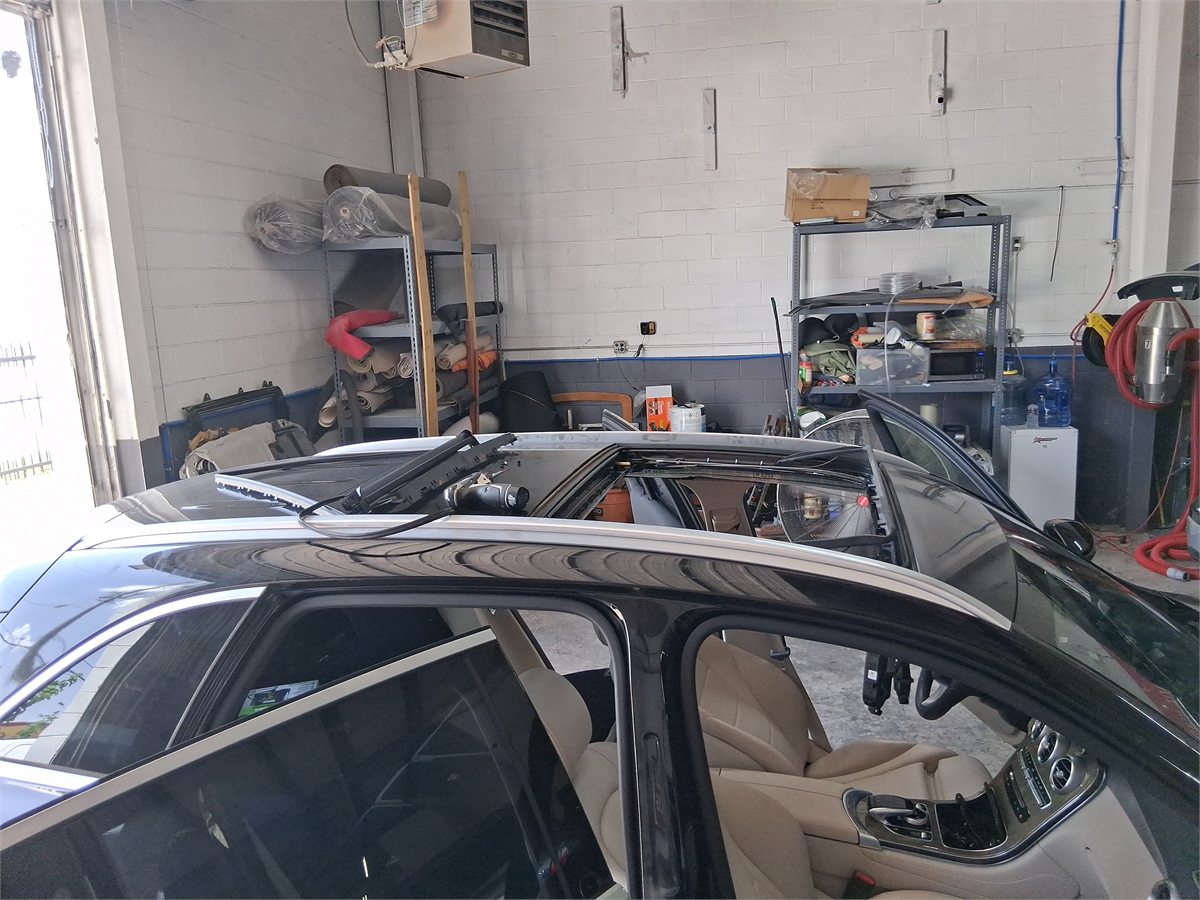
Glass out, frame and mechanism exposed. Almost none of this is reachable with the roof assembled.
Sunroof Problems We See In The Shop
If Your Sunroof Is Doing Any Of This, It Is Worth Looking At
How A Sunroof Fault Gets Diagnosed
Not Every Vehicle Requires Every Step
Because one symptom can come from several parts, the roof is looked at before anything is decided. A visual estimate is free, and you are told what is involved before work starts.
Listen To What It Is Doing
When it started, what changed, what it sounds like, and whether anything else was done to the vehicle first.
Operate And Observe
Where it stops, what it sounds like at that point, and how the glass sits in the opening. That is lost once the assembly is stripped, so it is gathered first.
Separate Glass, Shade And Drainage
A jammed shade, an obstructed panel and a blocked drain can all arrive as one vague complaint. Which system is at fault changes the repair entirely.
Establish The Access Needed
How much trim has to come out, whether the headliner drops, and whether the glass comes off. You are told before that starts.
Inspect And Repair
Rails, guides, lift arms, cables, drive and shade — including what the original fault has damaged since, which is often more than one part.
Align, Reassemble And Test
The panel is set to travel square and close flush, the interior goes back together, and the roof is run through its range before you collect it.
Tracks, Guides And Mechanisms
Under the glass sit the parts doing the physical work: rails the panel runs along, guides holding it to them, and lift arms raising and lowering its edges. These are the components that wear, and they carry the panel every time the roof is used.
Plastic goes brittle with age and Houston heat, guides wear out of shape, and a rail can distort. Damage tends to spread — a failed guide on one side lets the panel sit crooked, which loads the other side unevenly.
Noise is the earliest warning most owners get, and the cheapest point at which to act. Full detail on our Sunroof Track & Motor Repair page.
If It Is Binding Or Making A Noise, Stop Cycling It
Continuing to operate a binding roof is how a small repair turns into a large one. The motor is strong enough to force the panel past an obstruction, and what breaks next is usually a guide or rail alongside the worn part.
Motors And Drive Systems
A sunroof that does nothing is usually assumed to be a dead motor. Sometimes it is. Often it is not. It can sit still because the motor has failed, because the drive is no longer connected to what it should be moving, or because something is jammed too solidly for the motor to turn.
The sound is a real clue: a motor running while nothing moves points somewhere different from a single click, and both differ from silence. It is one of the first things we will ask.
Many systems also track where the roof is. When that reference is lost — after a battery disconnection, or a failed component — the roof may travel a short distance, refuse to tilt, or ignore the switch. A reset can then be the whole answer. But a reset only works on a roof mechanically able to complete it, and fitting a motor to a jammed roof fixes nothing, which is why the drive is checked against the mechanism rather than on its own.
Glass Problems
Two different situations get described the same way, and they are not the same job.
Broken glass is a replacement: see Shattered Sunroof Glass Replacement, or Sunroof Glass Replacement. An open roof with broken glass needs covering until the vehicle is seen.
Glass that is intact but sitting wrong is usually a symptom rather than a cause. The panel is held by the mechanism, so glass sitting low at one corner, standing proud at the rear, or closing at a slight angle generally means something carrying it is worn or out of adjustment. Setting the glass without addressing that puts it back out of line as soon as the roof is used — and misalignment is where wind noise and water past a seal usually begin.
Leaks And Drainage
A sunroof is not sealed like a windshield. Water is expected to get past the outer seal, and the system catches it in channels around the frame and carries it away down hoses inside the pillars.
So water inside is usually not a hole in the roof. Far more often it is a drain blocked with leaf litter and grit, a hose off its spigot, or a split channel. Water also does not appear where it entered — it runs along the frame, down a pillar, and into carpet or headliner some distance away.
That is why tracing a leak means testing the drainage rather than guessing from where the damp patch is. Covered in full on our Sunroof Leak Repair page.
Stuck Open Or Stuck Closed
A roof stuck closed is an inconvenience. A roof stuck open is urgent — Houston rain arrives quickly, and an open sunroof puts water straight into the headliner, the seats and the carpet. Get the vehicle under cover while you arrange to bring it in.
Stuck in either direction points at the same short list: a broken guide, a jammed shade fouling the panel, a drive no longer connected, a failed motor, or a lost position reference. Which one it is decides the repair, and it is not something that can be settled over the phone.
More on both situations, including what not to do to a stuck panel, on our Sunroof Stuck Open Or Closed page.
Sunroof Shade Problems
The shade runs on its own tracks, separate from the glass, and under constant Texas sun it fails in its own ways: jamming partway, leaving its guides, sagging, or refusing to retract.
Worth knowing: a shade off its track can foul the glass mechanism and stop the roof moving. A driver reasonably reports that as “the sunroof is stuck” — and the glass may be perfectly fine. Establishing which of the two is obstructed is part of the inspection. See Sunroof Shade Repair.
Interior And Headliner Access
Almost none of a sunroof mechanism is reachable from inside the car with the interior in place. Rails, guides, lift arms, cables, motor, drains and shade all sit above the headliner, so a good deal of sunroof work begins with taking trim out.
How far that goes depends on the fault. Some jobs need a little trim removed. Others need the headliner lowered or fully out — a large board that has to come out and go back without being creased or marked — and some need the glass off as well.
Seats, carpet and console are covered before anything starts, and trim and fixings come out in order and are kept together. Headliners in their own right: Auto Headliner Repair.
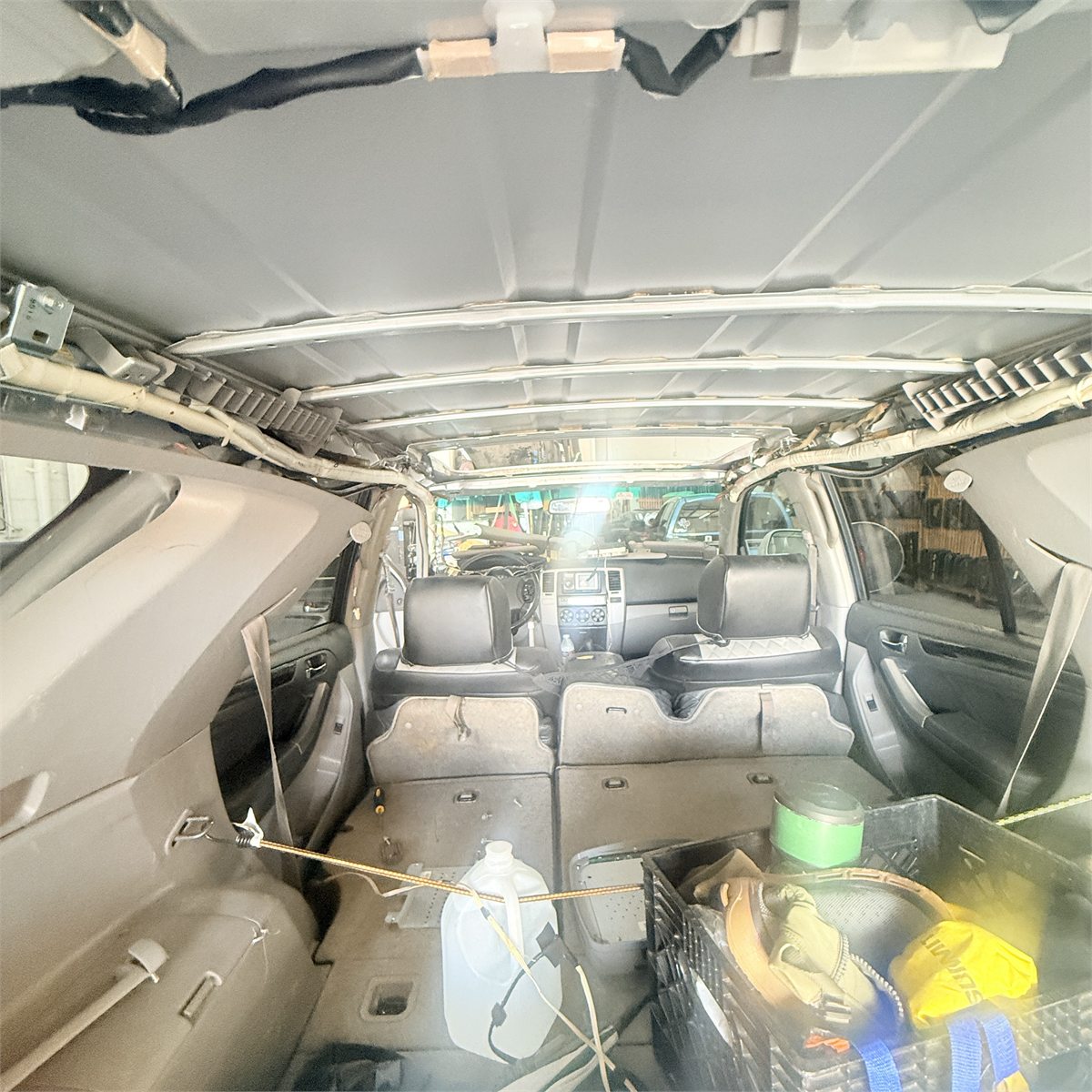
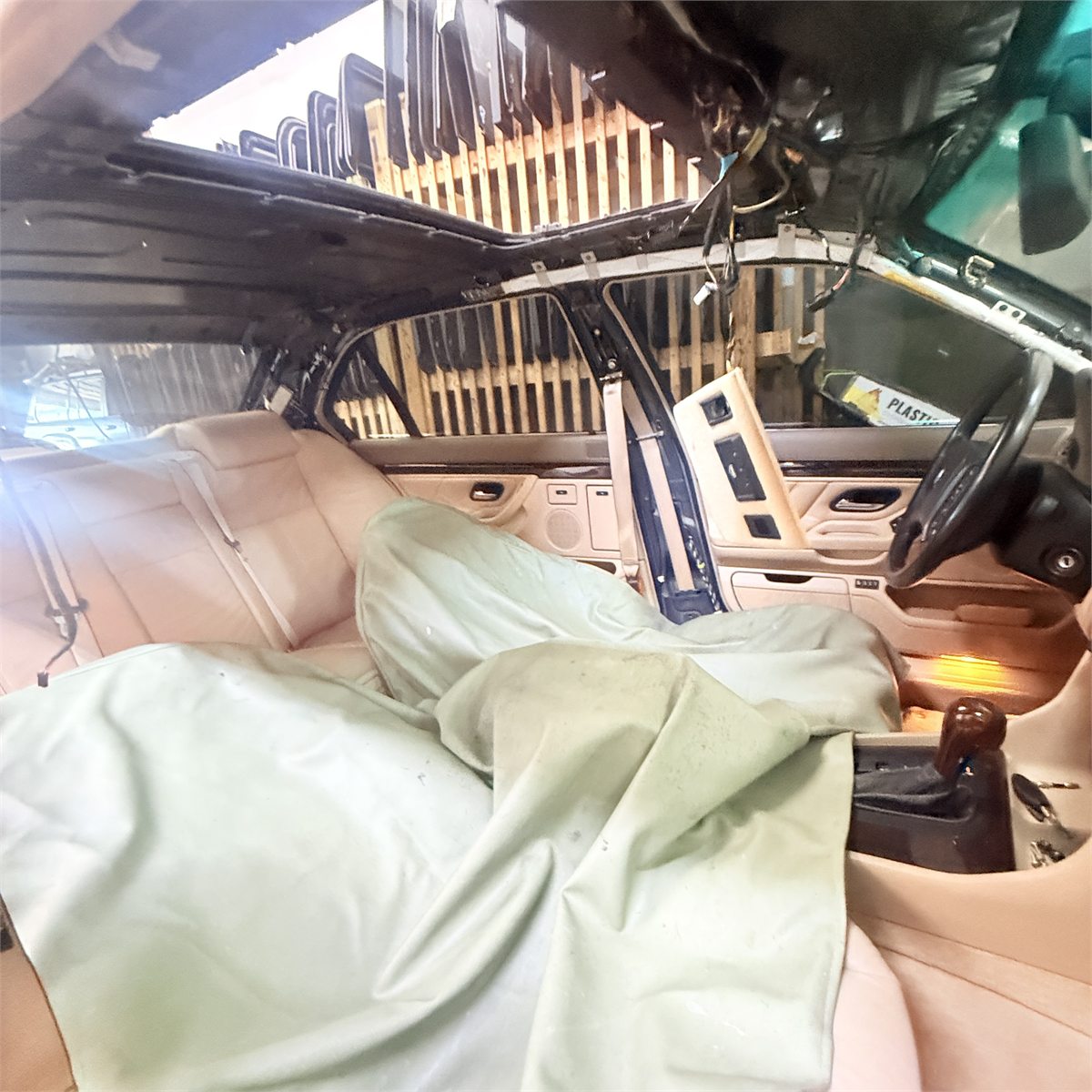
Left: headliner lowered to reach the roof structure. Right: the same job with the seats covered before anything is taken apart.
Why Repair Procedures Vary By Vehicle
There is no single factory sunroof design, and no single repair procedure. Manufacturers build these assemblies differently, and the differences decide what a job actually involves.
Cassette layouts differ. Some panels tilt and slide, some only tilt. Shades may be manual or motorised. Drain routes differ. How much interior has to come out to reach the mechanism differs a great deal from one vehicle to the next. Two cars with the same complaint can need different parts and very different amounts of disassembly.
That is why we will not quote a sunroof repair from a description over the phone. We do see patterns by make — enough that Ford, Toyota Camry and Mercedes roofs have pages of their own here. Larger multi-panel roofs are a different assembly again: see Panoramic Sunroof Repair.
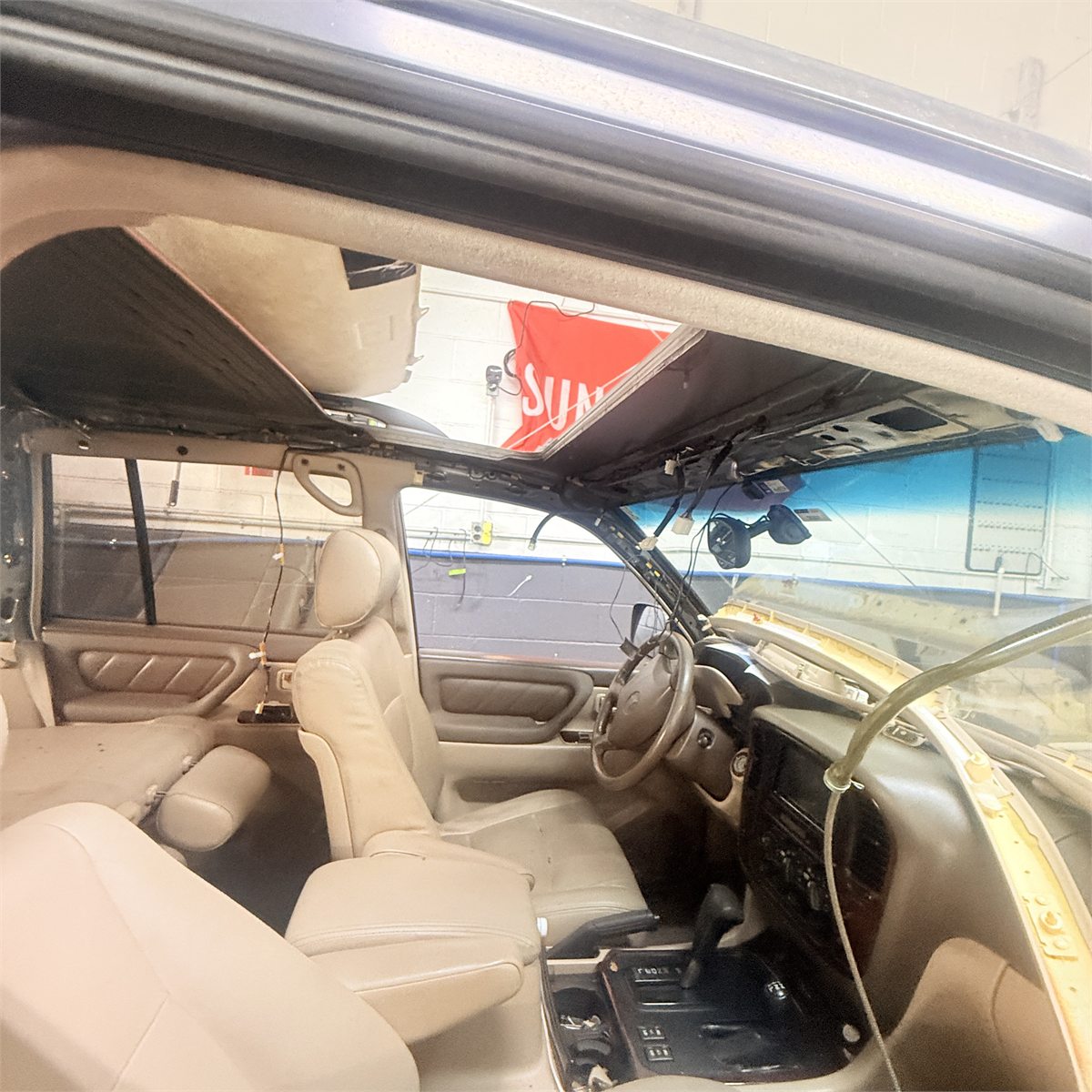
Every vehicle opens up differently — how far the interior has to come apart is part of what the inspection establishes.
Sunroof Work Since 1979
Sunroof King has specialized in sunroofs and roof systems in Houston since 1979 — not general automotive repair with sunroofs on the side, but roof mechanisms, glass, shades, headliners and installations.
That focus is the reason a sunroof gets diagnosed rather than guessed at. These assemblies differ considerably between manufacturers, and a repair means getting an interior apart and back together properly as well as fixing the mechanism.
All work is carried out at our shop at 9330 Westpark Dr, Monday to Friday, 8:00 AM to 5:00 PM. Our Gallery has photographs from the shop and the FAQ answers what we are asked most.
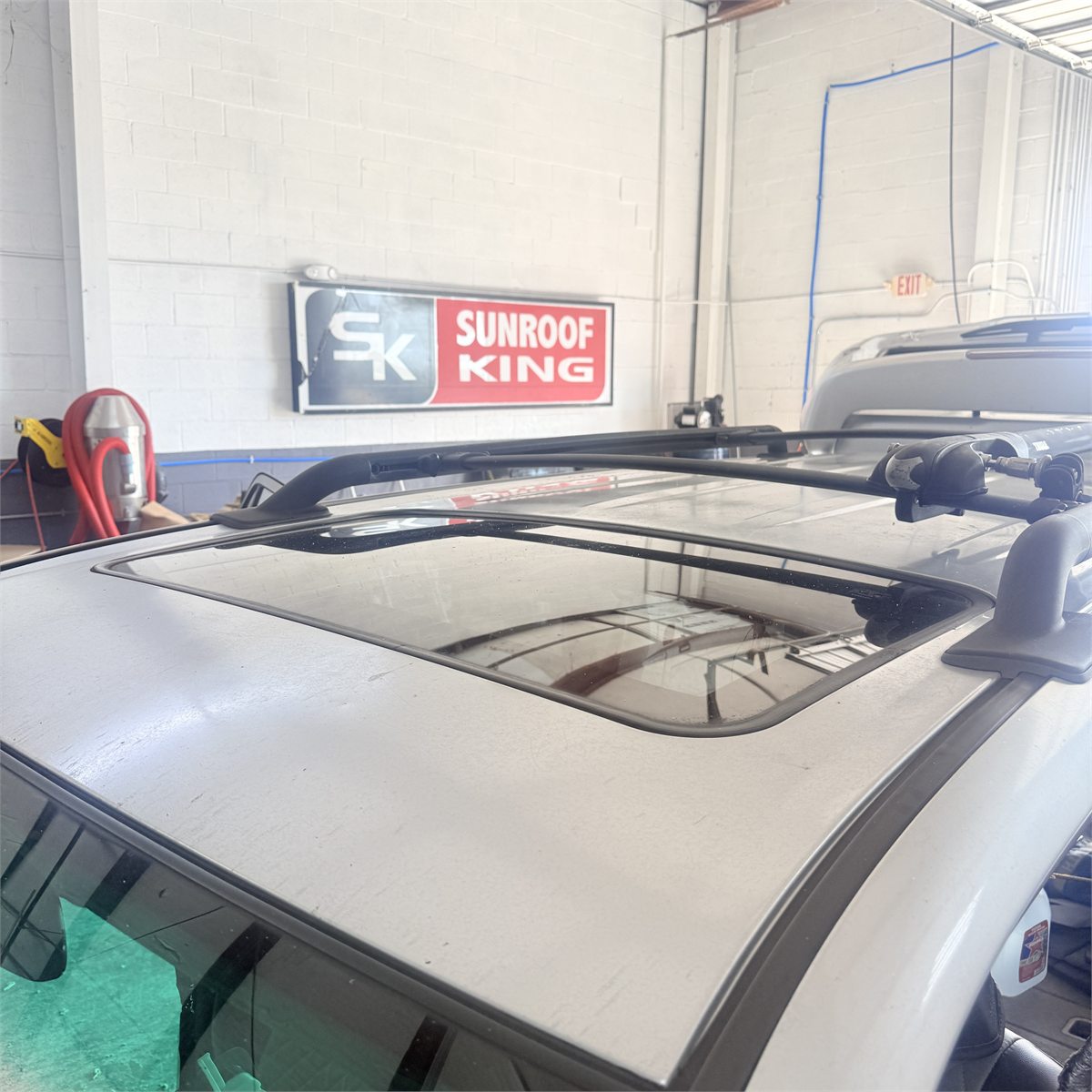
In the shop on Westpark Drive.
What We Will Not Talk You Through Over The Phone
We are not going to give you instructions for dropping a headliner, taking the glass off, prying at a stuck panel, or forcing a roof closed by hand. The panel is heavier than it looks, it is held by mechanisms already suspect if the roof is misbehaving, and forcing it is how glass and rails get damaged. Tell us what it is doing and bring the vehicle in — (832) 217-0430.