
Vehicle-Specific Repair
2019 and newer Camry panoramic roofs — diagnosed and repaired in our Houston shop.
The panoramic roof fitted to the 2019-and-newer Toyota Camry uses a two-panel system with its own guide rails, lift mechanism and sliding sunshade. When one part of that assembly wears or moves out of position, the symptoms usually show up as uneven movement, a roof that stops partway, or a shade that no longer tracks.
We work on these systems regularly. Where the original assembly can be repaired, we repair it rather than replacing the whole cassette.
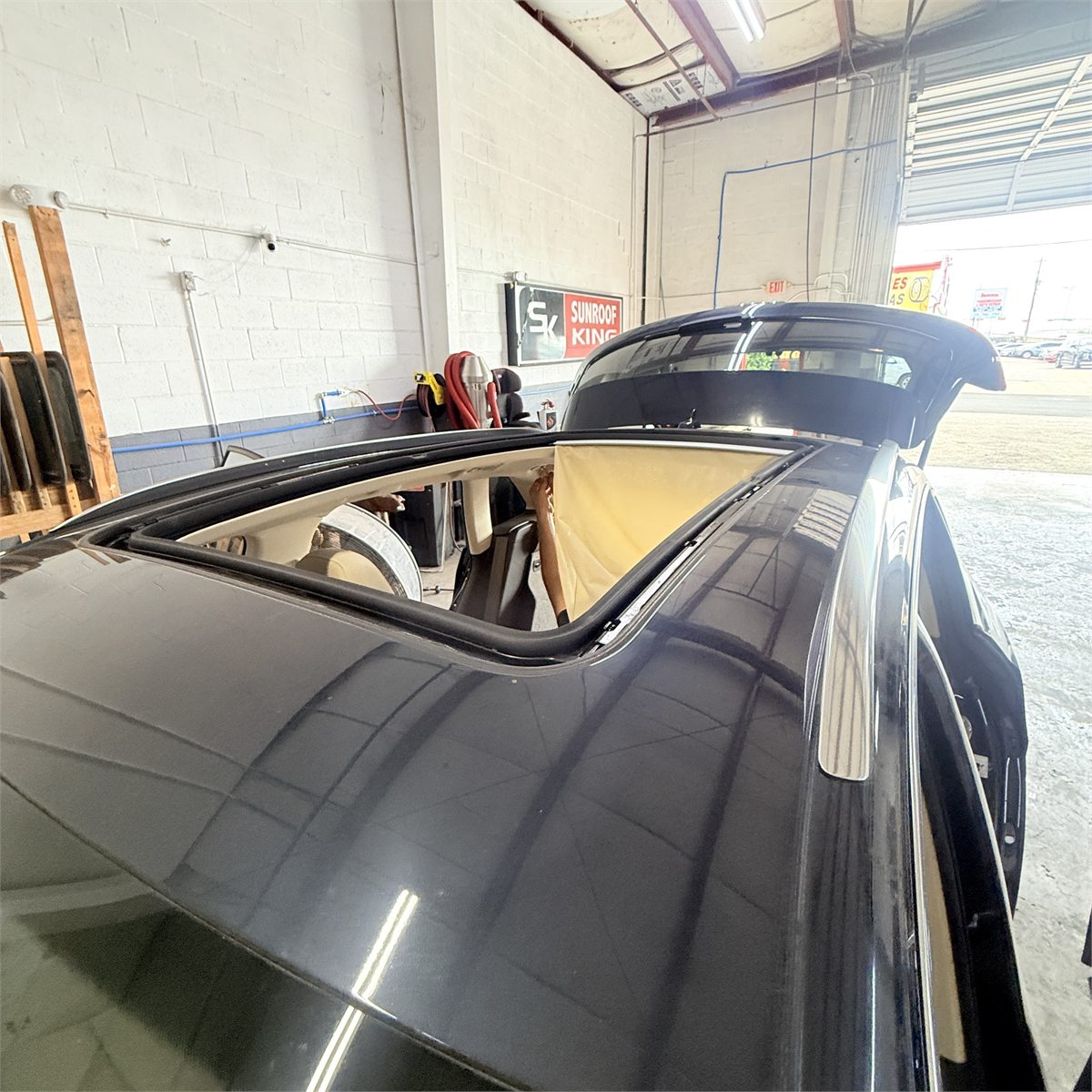
Symptoms Owners Describe When They Bring A Camry In
Guide rails and slider shoes. The panels ride on plastic guides inside the rails. As those wear or crack, one side can begin lagging behind the other — which is why an uneven or one-sided tilt is such a common first symptom.
Lift mechanism and linkages. The arms that raise and lower the glass have to move together. A bent, worn or displaced linkage produces a roof that opens partway and then reverses, or one that never sits flush when closed.
Sunshade carriers. The shade runs in its own channel. Broken carriers or a shade that has come off its guide will bind, sag, or stop moving entirely. See our Sunroof Shade & Curtain Repair page for how that assembly is handled.
Drain tubes. A panoramic roof is not sealed like a fixed window — water that gets past the seal is meant to run down drain tubes and out of the vehicle. When those block, water backs up into the cabin. That is a drainage problem rather than a glass problem, and it is covered on our Sunroof Leak Repair page.
Previous partial repairs. We also see Camrys where a repair was started elsewhere and left incomplete. Those are diagnosed from scratch before any parts are ordered.
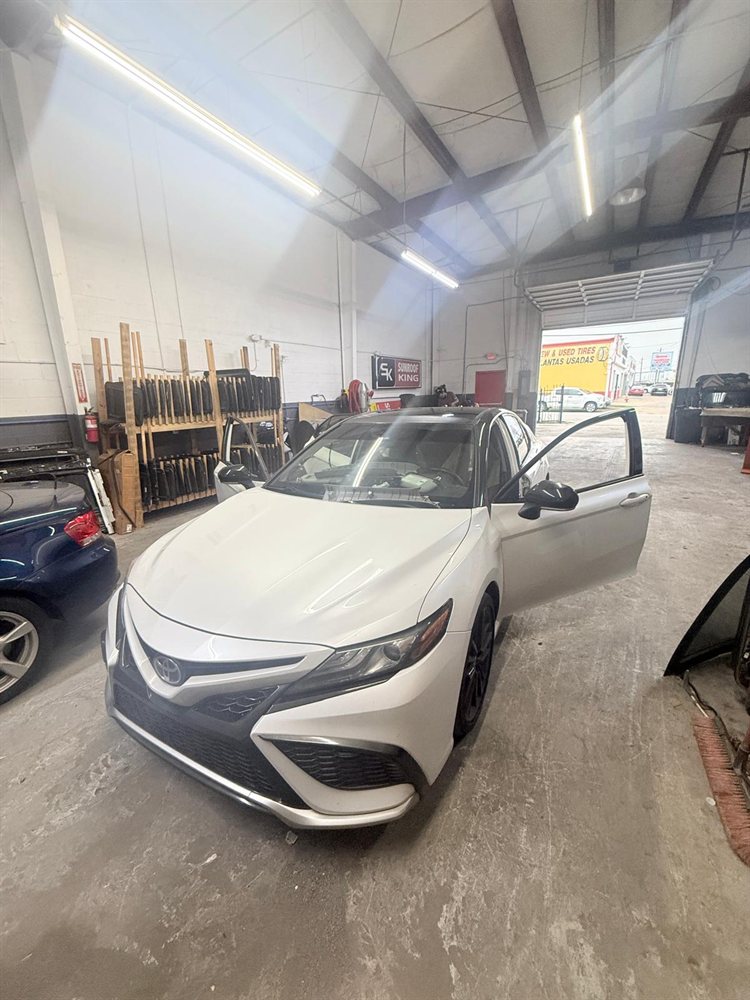
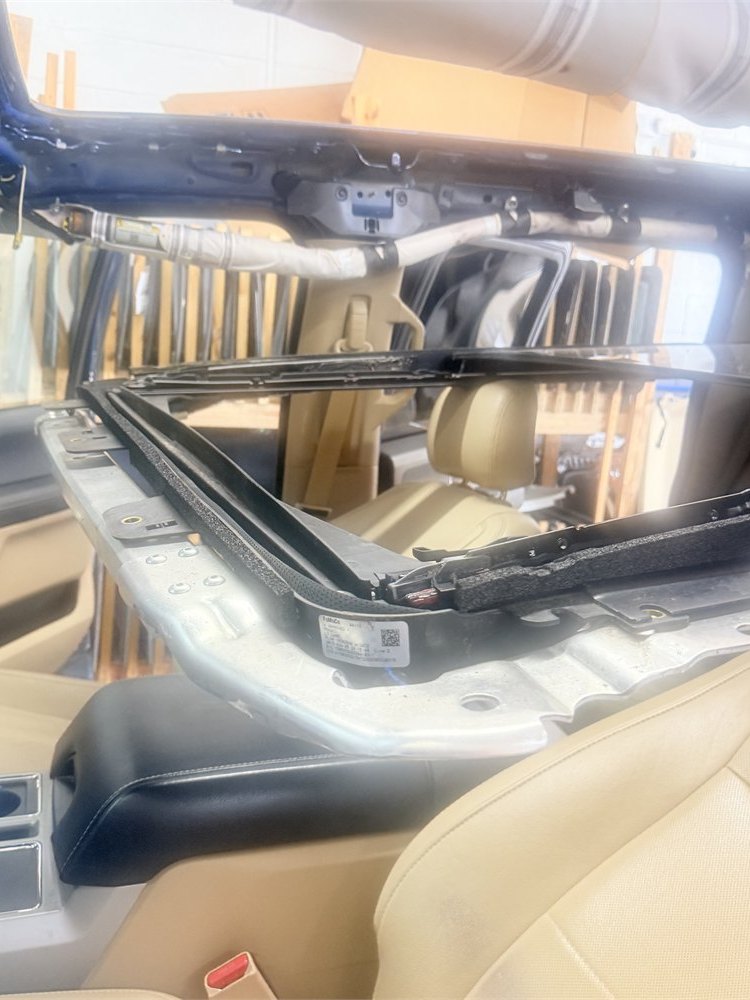
At our Houston shop: a Camry in for panoramic roof work, and a sunroof opening and mechanism accessed from inside the cabin.
We operate the roof, watch how both sides move, and check the shade and drains before forming an opinion. Most of what matters is visible in how the assembly behaves under power.
Reaching the rails and lift mechanism means removing the glass and dropping part of the headliner. This is why the work is done in-shop rather than in a driveway.
Worn guides, damaged carriers and displaced linkages are dealt with directly. Where the original assembly can be brought back into proper adjustment, we do that instead of replacing the entire cassette.
The glass is set back so both panels sit level and flush, the roof is cycled through its full travel, and the drains are checked before the vehicle goes back to you.